
Coverage line
Contractors Equipment Insurance for Landscapers
The mowers, zero-turns, skid steers, trailers, and handheld gear are the biggest asset your operation owns — and they are mobile, on job sites and riding the trailer all day. This is inland marine, the line that follows the equipment where a fixed-address property policy cannot.
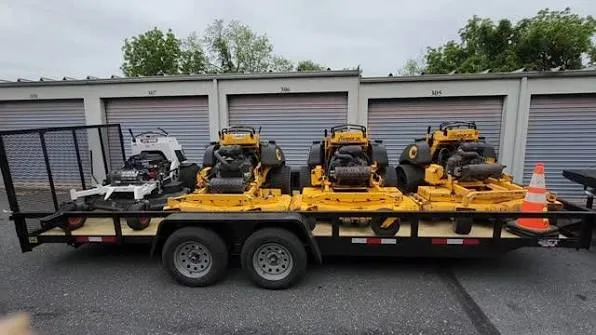

For a landscaping operation, the equipment is not overhead — it is the business. The mowers, the zero-turns, the skid steers, the trailers, the trimmers and blowers and edgers a crew draws from every morning: that fleet is almost always the single largest asset on the books, and it is what turns a signed account into completed work. Take it away and the route does not run. A trailer of mowers stolen out of a lot overnight does not just cost the price of the machines — it can shut down crews the next morning, push back jobs you are already booked for, and put accounts at risk while you scramble to replace gear that was supposed to be earning that day.
That is the exposure this page is about, and it is the reason contractors equipment is a signature coverage for this trade rather than an afterthought. The defining fact about a landscaping operation’s most valuable property is that it moves. It is not parked in a fixed building waiting to be used — it loads out at dawn, rides a trailer from account to account, and sits on a job site exposed for hours at a time. The coverage that protects it has to follow it, and the policy most operators assume covers it — a property policy tied to the address of the shop or yard — was never built to leave that address. Contractors equipment, written as inland marine, is the line that does.
Why this is inland marine, not commercial property
Start with the distinction, because getting it wrong is how operators end up with an expensive gap. Commercial property is tied to a fixed location. It is built for the things that stay put at an address — a building, the contents of a shop, fixtures, inventory — and it responds to perils like fire and theft there, at the insured premises. The policy form is anchored to the property line, and once your property leaves that line, the coverage largely stops following it.
A landscaping operation’s most valuable property does almost nothing at the address. The mowers and machines spend their working life on the move — in transit on the trailer between accounts, and parked on a job site while a crew works. Inland marine is the family of coverage written precisely for property that travels or sits away from a fixed premises, and contractors equipment is the inland-marine form built for owned, movable business equipment. It covers the gear against sudden, accidental physical loss — theft, fire, vandalism, collision and overturn damage in transit — whether the equipment is in the yard, on the trailer, or at the account. That is the whole reason the two are not interchangeable: a property policy protects the base you run from, and inland marine protects everything that leaves it. For a landscaping operation, the leaving is the job.
Theft from a job site or off a trailer
If there is one loss that defines this coverage for landscaping operators, it is theft. The equipment is valuable, it is portable, it is in demand, and it spends its days in the least secure places imaginable — a trailer in a parking lot, a staging area on an open job site, a truck left at a fuel stop, a yard accessed after hours. A locked shop is a hard target; a tandem trailer of mowers sitting curbside while a crew works around back is not. This is the most common contractors equipment claim landscaping operators bring, and it is the everyday exposure that comes simply from doing the work where the work is.
The shapes it takes are familiar to any operator: a trailer hitched and driven off overnight, mowers and machines unloaded and taken from an unattended job site during the day, handheld gear lifted out of an open truck bed while the crew is fifty feet away, the whole rig gone from a lot before dawn. None of these is covered by a property policy anchored to your shop, because none of them happened at your shop — and none is covered by commercial auto, which answers for the truck and trailer as vehicles, not for the mowers loaded on them. Contractors equipment is the line written to respond to the theft of your gear wherever it sits, subject to the policy terms and any security conditions the form attaches, which is why we read those conditions with you before you bind rather than discover them inside a claim.
Equipment damage and breakdown
Theft is the headline, but it is not the only way a machine goes out of service. The gear takes a beating in the ordinary course of work, and contractors equipment is built to respond to sudden, accidental physical loss beyond theft. A zero-turn that overturns on a slope, a mower struck while loading, a skid steer damaged when an attachment lets go, a trailer-load that shifts and crushes the gear riding behind it, vandalism to machines left on a job site, a fire in the yard — these are physical-damage losses to your own equipment, and they are exactly what the form is written to cover.
Some policies also extend to mechanical or electrical breakdown — the internal failure of a machine that is not the result of an outside event — though this is a feature that varies by form, sometimes built in, sometimes added, sometimes excluded entirely. It matters for a landscaping operation because the equipment runs hard, season after season, and an unexpected breakdown of a high-value machine takes a crew offline as surely as a theft does. Whether your policy responds to breakdown, and on what terms, is a function of the specific wording — which is why we read the form against the machines you actually run rather than assume the standard grant covers it.
Equipment in transit on the trailer
Coverage in transit is central to inland marine, and for a landscaping operation it is the part of the form that earns its keep, because the equipment is in transit constantly. The gear is loaded on the trailer at dawn, towed to the first account, partially unloaded, reloaded, hauled to the next stop, and brought home at the end of the day — repeated across every crew, every route, every working day of the season. Inland marine follows the equipment through all of it. Whether the mowers are riding the trailer between accounts or staged at the job site, contractors equipment is the line that stays with the gear.
This is also where the seam with commercial auto sits, and it is worth being precise about it. Commercial auto covers the truck and the trailer as vehicles — the collision, the liability, the trailer as a registered, towed unit. It does not cover the mowers and machines loaded on that trailer; those are your equipment, and they are covered by inland marine. A road incident that damages both the trailer and the gear on it can touch both policies at once — auto for the trailer, contractors equipment for the load — which is exactly why the two lines have to be coordinated rather than assumed to be one thing. We set them up to meet cleanly so a transit loss does not fall into the gap between them.
Scheduled vs blanket (unscheduled) equipment
Contractors equipment is usually arranged in two layers, and understanding the split is how an operator avoids being underinsured on a major loss. Scheduled equipment is the list of higher-value items named individually on the policy — the zero-turns, the skid steers, the larger mowers, the specialized machines — each carrying its own limit set to what it would cost to replace that specific unit. Scheduling a machine ties the coverage to its actual value, which is what you want for the gear that represents the most money.
Blanket, or unscheduled, coverage handles the opposite end — the large pool of smaller, interchangeable, lower-value items a crew uses by the dozen. Trimmers, blowers, edgers, hand tools, irrigation and lighting tools: listing each one individually would be unworkable, so they are covered under a single blanket limit that the pool draws from. The practical discipline is matching each layer to reality — scheduling the big machines at honest replacement values, and setting the blanket limit high enough to cover the realistic total of the small gear a crew carries. Get the blanket too low and a truck full of stolen handhelds maxes it out before the claim is whole. We size both layers to what you actually own so neither leaves you short.
Leased, rented, and borrowed equipment
Not every machine on a job site is owned outright, and a landscaping operation regularly runs work on equipment it does not own. A large build leans on a rented skid steer or excavator; a leasing arrangement carries part of the mower fleet; a piece gets borrowed from another crew to finish a job. Each of these is property in your care, custody, or control — and if it is stolen or damaged while you have it, you are typically on the hook for it under the rental or lease agreement you signed.
Contractors equipment can be written to extend to leased and rented equipment and to property of others in your care, but the treatment varies by form: some carry an automatic sublimit for rented gear, others require it to be scheduled or endorsed, and a rental house or leasing company will impose its own insurance requirement and may demand to be named on the coverage. The exposure is easy to overlook precisely because the equipment is not yours, right up until a rented machine is stolen off the site and the rental contract makes the loss yours anyway. We read the rental and lease agreements against the policy so the obligation you actually signed is covered, not assumed.
Why landscaping work specifically needs it
Plenty of businesses own some equipment. Few are as defined by it as a landscaping operation, and fewer still keep their most valuable property in motion the way this trade does. The work itself dictates the exposure: the gear is high in value, concentrated in a handful of expensive machines, portable enough to be a theft target, and on the move or sitting exposed at a job site every single working hour. That is a very different profile from a business whose equipment lives bolted to a shop floor, and it is why a generic property policy underserves the trade.
It also reads differently across your operating models. A Landscaping build operation runs skid steers, loaders, and heavy machines on construction-style job sites where the gear stages outdoors for the duration of the project. A Lawn Care operation runs a maintenance route built on mowers and handheld gear cycling on and off trailers all day across many stops. A Lawn Irrigation Installation outfit runs trenchers and specialized digging equipment, and a Landscape Lighting crew runs lower-value but specialized install tools. Each profile schedules and blankets differently, and writing them all off one generic equipment line mismatches the coverage to the work. The way we structure the schedule follows the machines your crews actually run.
What contractors equipment responds to
Stated plainly and qualitatively — because the specifics live in the policy form and your equipment values, not in a fabricated dollar figure — contractors equipment is built to respond to first-party loss of your owned (and, where written, rented or borrowed) equipment across these areas:
- Theft. Equipment stolen from a job site, off a trailer, out of a truck, or from the yard — the everyday inland-marine exposure for gear that lives away from a fixed premises, subject to the form’s security conditions.
- Physical damage. Sudden, accidental damage to your machines — overturn, collision, a dropped or struck unit, vandalism, or fire — whether at the shop, in transit, or on the job site.
- Loss in transit. Damage or loss to the equipment while it is being hauled on the trailer between accounts, distinct from the truck and trailer themselves, which are commercial auto.
- Mechanical or electrical breakdown. The internal failure of a covered machine, where the form grants it — a feature that varies by policy and is read against the gear you run.
What the line responds to, and on what terms, comes down to the wording, the schedule, the blanket limit, and any security and transit conditions on the form. That is the reading we do against your actual fleet before you bind, so the coverage matches the machines that earn your revenue.
Limits and structure
Contractors equipment is generally structured around the two-layer schedule-and-blanket arrangement, a per-item or per-occurrence limit, a deductible set per loss, and any security or transit conditions the form attaches. The right structure for your operation is driven by what you actually own and run — the count and replacement value of your high-value machines, the realistic total of your small handheld gear, how and where the equipment travels, how secured the yard and trailer are, your claims history, and any rented or leased equipment and the contracts that govern it. Rather than quote a number, we set the schedule and blanket limits to your real equipment values and confirm the security and transit conditions so a claim is not denied on a condition you never knew about. Where a machine you do not own sits in your care, we make sure the rental or lease obligation is actually covered. The seam with general liability matters here too — this line covers your equipment, while damage your equipment does to someone else’s property is a general liability claim, and the truck and trailer as vehicles are commercial auto. We place all three so a loss lands on the policy built for it.
Why Landscaping Guard Insurance
We are an independent agency that writes one trade — commercial landscaping and lawn care operators — and within it we treat the equipment fleet as the signature asset it is. That focus is the point. We know to ask what machines you run and what they are worth before quoting, to schedule the high-value units at honest replacement values rather than guess, to set the blanket limit to the real total of your small gear, to read the theft and transit conditions on the form so a job-site loss is not denied on a condition you never saw, and to coordinate this line with your commercial auto and general liability so the truck, the trailer, your gear, and the property around it each sit on the policy built for them. When a rental contract or a job lands with equipment requirements you do not recognize, that is a call we take. Start with a quote, or talk it through with us first.
Learn more
Contractors equipment works as one line in a system built for the way landscaping crews operate. Its closest neighbors define it by contrast: general liability covers the third-party damage your work does to someone else’s property — a rock thrown from a mower, a struck utility, a gouged driveway — where this line covers your own gear, and commercial auto covers the trucks and trailers as vehicles, where this line covers the machines loaded on them. It sits alongside pollution liability for the chemical-application exposure on the lawn care side, workers compensation for crew injury, and umbrella liability when a contract demands limits above your primary layers. The exposure is defined by the work, so see how the equipment profile shifts across Landscaping Insurance and Lawn Irrigation Installation Insurance, the models where the machines run heaviest.
Coverage for landscaping contractors
- General Liability Insurance
- Commercial Auto Insurance
- Workers Compensation Insurance
- Pollution Liability Insurance
- Umbrella Liability Insurance
Landscaping specialties
- Landscaping Insurance
- Lawn Care Insurance
- Lawn Irrigation Installation Insurance
- Landscape Lighting Insurance
Coverage Explained
- How to Protect Your Equipment From Theft
- Does General Liability Cover a Rock Thrown From a Mower?
- Do You Need Commercial Auto for Your Landscaping Trucks and Trailers?
Common questions
- Is a mower covered if stolen off the trailer?
- Does general liability cover your own equipment?
- Inland marine vs. commercial property?
- Is rented or borrowed equipment covered?
- Is equipment breakdown covered?
Get covered
Primary sources
Frequently asked questions about Contractors Equipment Insurance
Why is contractors equipment inland marine and not commercial property?
Because the equipment moves. A commercial property policy is tied to a fixed address — the shop or yard you run from — and it largely stops at the property line, built for what stays put. A landscaping operation’s mowers, zero-turns, skid steers, trimmers, blowers, and the trailer that hauls them spend the working day everywhere except that address: loading out at dawn, riding the trailer between accounts, and sitting on a job site for hours. Inland marine is the form written for property that travels, so contractors equipment follows the gear in the shop, in transit on the trailer, and at the account. A property policy alone leaves the gap exactly where your most valuable working assets actually spend their day.
If my mowers are stolen off the trailer or from a job site, does this respond?
That is one of the core reasons landscaping operators carry this line. A mower, a zero-turn, a skid steer, a string of trimmers and blowers, or the whole trailer taken overnight, from a lot, or off a job site mid-day is exactly the loss contractors equipment inland marine is built to respond to, subject to the policy terms and any security conditions on the form. A fixed-address property policy does not follow the equipment once it leaves the yard, and your commercial auto policy covers the truck and trailer as vehicles, not the mowers riding on them. We read how the form treats theft from a trailer or unattended site before you bind so there is no surprise in the claim.
What is the difference between contractors equipment and general liability for equipment loss?
It comes down to whose property is damaged. Contractors equipment is first-party coverage — it pays for damage to or theft of your own gear, the mowers and machines you own. General liability is third-party coverage — it responds when your work damages someone else’s property, such as a rock thrown from a mower breaking a window or a machine that gouges a customer’s driveway. The two are not interchangeable. If your skid steer is stolen, that is a contractors equipment claim; if your skid steer cracks a customer’s retaining wall, that is a general liability claim. We make sure both lines are in place so a loss lands on the policy built for it.
Does this cover equipment I lease, rent, or borrow?
It can, and for a landscaping operation that matters because a big job often runs on a rented skid steer, a leased mower fleet, or a piece borrowed from another crew. Contractors equipment can be written to extend to leased and rented equipment and to property of others in your care, custody, or control, but the terms vary by form — some carry an automatic sublimit for rented gear, others require it to be added. A rental house or a leasing company will also impose its own insurance requirement in the contract. We read the rental and lease agreements against the policy so the obligation you signed is actually covered rather than assumed.
How are contractors equipment limits structured for a landscaping operation?
It is usually built in two layers. Higher-value machines — the zero-turns, the skid steers, the larger mowers and specialized gear — are scheduled individually, each listed with its own limit tied to what it would cost to replace. The pool of smaller, interchangeable items — trimmers, blowers, edgers, hand tools, irrigation and lighting tools — is covered under a blanket (unscheduled) limit so you are not listing every string trimmer. The drivers are what you own and its value, how and where the equipment travels, and how secured the yard and trailer are. Rather than publish a figure, we set the schedule and the blanket limit to your actual equipment values so a major loss is not underinsured.
Is the trailer itself covered by this, or by commercial auto?
The trailer sits on the seam, and it depends on what part of the trailer you mean. The trailer as a vehicle — being towed on the road, in a collision, registered and titled — is generally the province of commercial auto, the same line that covers the truck pulling it. The mowers and equipment riding on that trailer are contractors equipment. So a single trailer loss can touch two policies: auto for the trailer as a towed vehicle, inland marine for the gear loaded on it. We coordinate the two lines deliberately so the trailer and everything on it is accounted for and nothing falls through the gap between auto and inland marine.
Protect the fleet that runs your routes
Tell us what machines you run and where they travel, and we will market it to carriers that write contractors equipment for landscaping operators.