

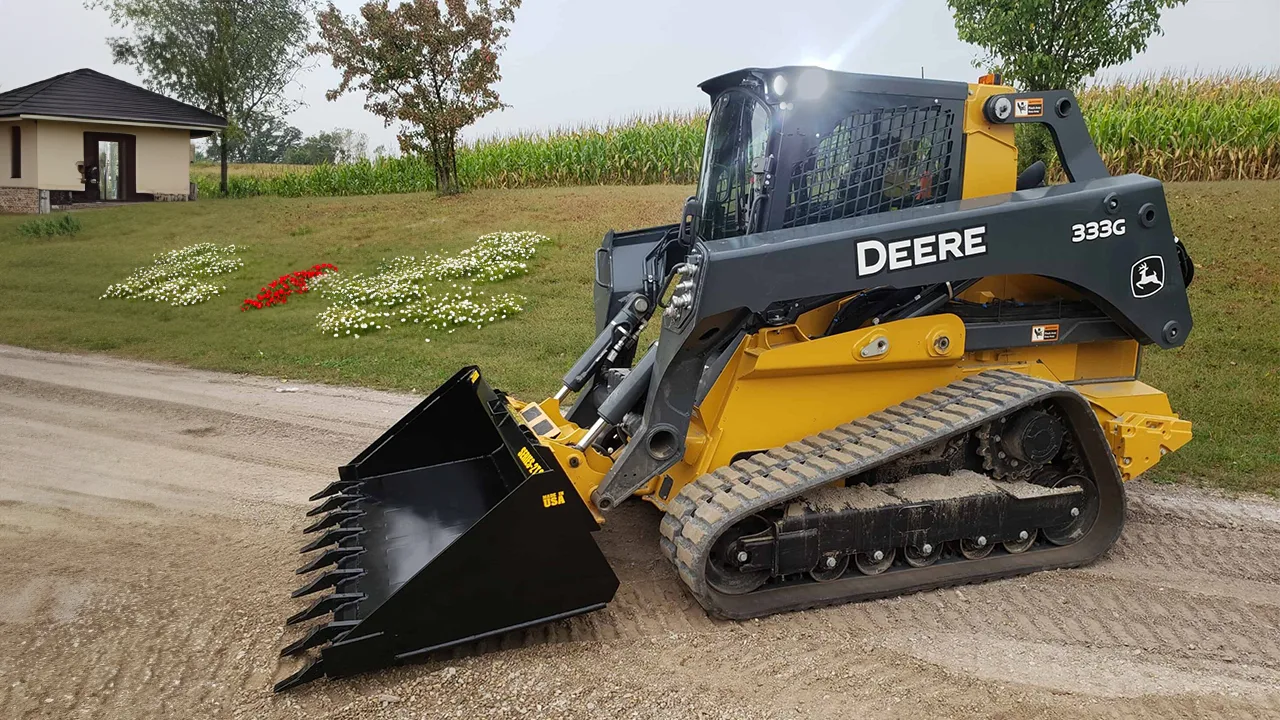
No. General liability does not cover your own tools and equipment — and that surprises a lot of operators, because it is the policy they already carry and the one a contract told them to get. But general liability is third-party coverage: it pays for injury or property damage you cause to others, not for your own property. Your mowers, trimmers, blowers, and trailers are first-party assets, and the line written to cover them is contractors equipment. This guide walks exactly why the liability policy stops at your own gear, what does cover it, and the misconception that costs operators the most.
It is the single most common coverage misunderstanding in the trade, and it is an easy one to fall into, because general liability has the words property damage right in it. But that coverage runs in one direction only — outward, to the property of others. Below is that narrow distinction, first-party versus third-party, answered in full, with the broader equipment-coverage mechanics left to the page they belong on.
The short answer: general liability is third-party, your gear is first-party
General liability is built around your legal liability to other people. It responds when your work causes bodily injury to a third party or physical damage to someone else’s property — a rock thrown from a mower that breaks a customer’s window, a machine that gouges a client’s driveway, a bystander injured at the site. That is third-party coverage: the harm flows from you to someone outside your operation, and the policy answers for it. Your own equipment is not a third party. It is your asset, your first-party property, and the form simply does not reach it. The line that does is contractors equipment, written as inland marine — the first-party coverage for your owned, movable machines. The full anatomy of that line lives on its page; this post stays on the single distinction operators search after a denied claim: why the liability policy did not cover the operator’s own stolen mower.
The trap: general liability has “property damage” in it
Here is where the misconception takes hold. An operator reads the general liability policy, sees that it covers property damage, and reasonably concludes that the property damage in question includes the mower sitting in the shop. It does not. The property damage general liability covers is damage to someone else’s property — the third party’s. The policy is written around your legal liability to others, so the property it answers for is always the property you might harm doing the work, never the property you own to do the work with. Same two words, opposite direction. Your skid steer cracking a client’s retaining wall is a general liability claim because the wall belongs to the client. Your skid steer being stolen is not, because the skid steer belongs to you.
That single distinction — whose property is damaged or lost — is what decides which policy answers. When the property is the third party’s, it is general liability. When the property is your own, it is contractors equipment. The general liability page itself draws this seam deliberately, pointing the operator’s own gear over to the equipment line rather than trying to cover it on the liability form. The two are written to sit side by side precisely because the work produces both kinds of loss.
Real-World Scenario: An operator carries a solid general liability policy because a property-management contract required it, and assumes the same policy protects the fleet. One night a walk-behind and two backpack blowers are taken out of an unlocked enclosed trailer at the shop’s edge. He files the theft on general liability, reasoning that the policy covers property damage and the gear is certainly damaged property to him. The carrier explains that general liability covers third-party loss only, and a theft of his own equipment is first-party — outside the policy entirely. The gear is gone, the claim is denied, and the only line that would have responded, contractors equipment, was the one he never bought.
Why you need both, not one or the other
The takeaway is not that general liability is the wrong policy — it is that it is the wrong policy for this loss. General liability is essential, and for a different reason: it answers the harm your work does to other people and their property, the exposure that clients, HOAs, and property managers require you to carry. A rock thrown from a mower, a gouged driveway, an injured bystander — those are real, frequent, and exactly what the liability line is built for. What it cannot do is double as protection for your own fleet.
So the two lines do different jobs and you generally need both. General liability handles the third-party side — the damage and injury you cause others. Contractors equipment handles the first-party side — theft of and damage to your own mowers, machines, and trailers, including when they are off-premises on a job site where a property policy would stop following them. Carrying the liability policy alone is the gap that leaves an operator’s single biggest asset uninsured, and it is the gap operators most often do not know they have until the trailer comes up light.
The reason the misconception is so durable is that nothing about it feels like a gap until a loss tests it. The general liability policy is real, it was bought because a contract required it, and on paper it lists property damage as covered — so the assumption that it protects the fleet is easy to make and rarely questioned. The equipment line gets skipped to save a line item, the assumption holds through every uneventful season, and it fails only the morning a machine is gone. The two-direction rule is what makes the gap visible before that morning: ask, for any loss, whose property was harmed. If the answer is the client’s, the neighbor’s, a bystander’s, it is third-party and general liability is in play. If the answer is your own — your mower, your skid steer, your trailer — it is first-party, and the only line that responds is contractors equipment. That single question sorts almost every equipment claim onto the right policy before it is ever filed.
What to do about your own gear
The fix is direct: stop relying on the liability policy to reach your own equipment, and carry the line that actually covers it. Put contractors equipment in place for the fleet you own, keep general liability for the third-party harm your work creates, and make sure the two are coordinated so a loss lands on the policy built for it. If you run a landscaping or lawn care operation, your machines are almost certainly the biggest asset on your books, which makes the equipment line core rather than optional. The most common and costly version of this gap is the stolen machine — see whether your mower is covered if it is stolen off the trailer for exactly how that claim routes, and why your equipment needs inland marine rather than commercial property for the location piece behind it. When you are ready, start a quote and tell us what you own and what it is worth, read the full contractors equipment treatment, or see where the equipment line sits in what drives landscaping insurance costs.