
Insurance by operating model
Irrigation System Installation Insurance for Contractors
Insurance for the irrigation install operation — sprinkler-system install and repair, backflow prevention, and the trenching that the work runs on — structured around the underground-utility-strike exposure that defines this operating model, where a trencher or hand tool can hit a buried gas, water, electric, or fiber line.
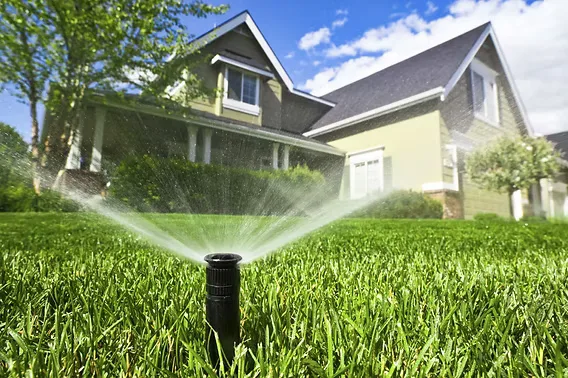

The defining risk of an irrigation installation operation is what is in the ground before your crew puts a shovel in it. Every sprinkler-system install and most repairs run on trenching: a trencher, a vibratory plow, or a boring head opening a path for pipe and wire through ground that hides gas, water, electric, and fiber lines no crew can see from the surface. Hit one, and a routine dig becomes a struck gas main, a severed fiber trunk that knocks out service to a block, or a flooded excavation — a third-party loss that lands fast and can be severe. That underground-utility-strike exposure is what separates an irrigation install model from the rest of the landscaping trade, and it is the exposure this coverage is built around.
The second half of the model is water. Irrigation work connects a system to a potable supply, sets zones and controllers, and — critically — installs and tests the backflow prevention that keeps a cross-connection from pulling contaminated water back into the supply. A backflow failure, a cross-connection mistake, or a water-line break is a different kind of loss from a thrown rock or a chemical drift, and it sits at the center of how this trade is regulated and how it is underwritten. An irrigation operation runs on digging and on water, and both carry exposures a generic contractor policy was never written to anticipate.
Two exposures concentrate the risk. The first is the underground-utility-strike exposure — a trencher or hand tool that hits a buried line during a dig is third-party property damage and service disruption that runs through general liability, controlled by the 811 one-call locate discipline. The second is the equipment exposure — the trenchers, plows, boring tools, and pipe-pulling gear that are the operation’s biggest asset travel between job sites every day and stage on open ground, which is what contractors equipment is for. On top of those sit the water-supply and backflow exposure, the crew running the dig, and the trucks and trailers that haul the rig.
This page covers how irrigation installation insurance is built as a whole: what the install model is and the work it covers, the trenching and water risk profile, the full coverage stack the model needs, the drivers that move cost, and how carriers underwrite a dig-and-water operation. If your work is design/build, recurring maintenance, or lighting instead, the other pillar pages are built for those models.
Running an irrigation install crew? Get a quote structured around your trenching, your water and backflow work, and the equipment in the field.
Get a Free QuoteWhat makes irrigation installation insurance different
Irrigation risk is trenching-and-water risk, and it lands hardest on two coverage lines in a way a generic contractor form does not anticipate. General liability carries the underground-utility-strike weight, because the single most severe everyday loss this trade generates is a struck line — and the way the policy is written around your digging, and how your crews run 811 locates, is what an underwriter reads first. Contractors equipment carries the asset weight, because the trenchers, plows, and boring tools that make the work possible are expensive, portable, and exposed on the trailer and the site every working hour. A policy rated to a generic service business treats neither with the emphasis an irrigation operation needs.
The practical consequence is that two irrigation operations with similar revenue can carry very different exposures depending on how and where they dig. A crew boring under streets and working dense urban ground full of utilities looks nothing like a crew trenching open turf on new construction — and writing both off one form underprices the utility-strike exposure on one and strands it on the other. We separate the irrigation install scope from any maintenance, build, or chemical work in the same book so the dig is not mispriced, and we weight the stack toward the lines this model leans on.
The work this covers
The irrigation install model holds several kinds of work that share one risk profile — ground that gets opened, water that gets connected, and equipment that travels to do it. These are the services that live within this pillar:
- Sprinkler-system installation. The core install work — laying out zones, trenching or plowing in pipe and wire, setting heads, valves, and controllers, and bringing a new irrigation system online at a customer’s property.
- Irrigation repair and service. Locating and fixing breaks, leaks, and failed components — often requiring spot digging into ground that already holds the system and the utilities around it.
- Backflow prevention installation and testing. Installing, testing, and certifying the backflow assemblies that keep a cross-connection from drawing contaminated water back into the potable supply — the regulated heart of connecting a system to a water source.
- Trenching, plowing, and boring. The excavation the whole model runs on — opening paths for pipe and wire through ground that hides gas, water, electric, and fiber lines, the work where the signature utility-strike exposure lives.
Design/build, recurring maintenance, and low-voltage lighting work are not part of this model — they carry their own signature exposures and live on their own pillar pages. If your operation runs more than one of these models, each scope is underwritten on its own terms.
State and regulatory considerations
An irrigation install operation sits at the intersection of underground damage prevention, water-supply protection, and worker safety — and the rules vary by state. The damage-prevention floor is the 811 one-call system, promoted nationally by the Common Ground Alliance as the Call 811 Before You Dig standard: every state runs a one-call center, and contacting it before excavation so utilities are marked is the practice the trade is built on and the first thing a struck-line claim is measured against. Backflow prevention and cross-connection control are governed at the state and local level — many states require certified backflow testers and permitted assemblies — and we keep the framing qualitative rather than cite a code that varies by jurisdiction. Worker safety on the dig, including trench and excavation safety, runs through OSHA standards, where trenching carries some of the most serious hazards in the trade.
On top of that, workers compensation rules vary by state — including the four monopolistic states where coverage comes only from the state fund, which matters for a crew that runs work across state lines. As our state pages come online we link the licensing, damage-prevention, and regulatory specifics for the states we serve. Irrigation install activity concentrates in warm, long-season regions, so Tier-1 markets include states such as Texas, Florida, California, Georgia, and Arizona, and we write across all 48 licensed states.
Coverage breakdown
Here is the stack an irrigation installation operation carries, weighted for the trenching-and-water model. Each line links to its full page — and the two that carry the most weight, general liability and contractors equipment, are the signature placements.
- General Liability Insurance — a signature line: the underground-utility strike, the resulting service disruption and third-party property damage, the backflow and water-supply failure, and the public-facing exposures of an open excavation. The general liability page covers the mechanism in full.
- Contractors Equipment Insurance — the signature inland-marine line: the trenchers, vibratory plows, boring tools, pipe-pulling gear, and handheld tools that are the operation’s biggest asset, covered against theft and damage at the shop, in transit on the trailer, and on the job site.
- Commercial Auto Insurance — the trucks and the trailers that haul the trenchers and pipe between job sites every day, the daily-stop accident exposure, and the towed equipment trailer as a vehicle.
- Workers Compensation Insurance — medical and lost-wage coverage for the crew running the dig, with the lifting, equipment, and trench-and-excavation injury profile of install work, structured for a crew that may cross state lines.
- Pollution Liability Insurance — the water-contamination seam: a backflow or cross-connection failure that draws contaminated water back into a supply, and any chemical work, where general liability’s pollution exclusion applies.
- Umbrella Liability Insurance — excess limits above general liability and commercial auto for larger operations and the higher limits commercial properties, HOAs, and municipal contracts often require.
What irrigation installation insurance costs
Premium tracks the dig, not a sticker price. The drivers that move it most are your payroll and the crew classifications it covers, how much of your scope is open-turf trenching versus boring under streets and working dense urban ground full of utilities, your 811 locate discipline and damage-prevention record, the count and replacement value of your trenchers, plows, and boring equipment, the share of work that involves water-supply and backflow connections, the limit and additional-insured requirements your commercial contracts impose, your multi-state footprint, and your claims history — especially any struck-line losses. A crew boring under a busy block looks very different to an underwriter than one trenching open ground on new construction. We price to that real picture and stand behind any figure we give — verified ranges come from us directly, never a generic guess.
Claims scenarios
These are plausible irrigation install claim categories, described qualitatively and with generic carrier language — every claim is handled by the carrier, never named here — and with no fabricated cost or frequency figures.
- A struck underground utility line. A trencher or boring head hits a buried gas, water, electric, or fiber line during a dig — the signature exposure of an irrigation operation, where the third-party damage and service disruption run through general liability and the 811 locate is the loss-control step.
- A backflow or water-supply failure. A cross-connection mistake or a backflow assembly failure draws contaminated water back into a potable supply, or a water-line break floods a property — a water-contamination loss that can reach general liability’s pollution exclusion and route to pollution liability.
- Trenchers or gear stolen from the trailer or site. A trencher, a vibratory plow, or a string of tools taken off a trailer or an unattended job site — the everyday inland-marine exposure that contractors equipment is built for.
- A crew member injured on the dig. A field injury — a lifting injury, an equipment incident, or a trench-and-excavation hazard — the workers compensation exposure of an install crew.
Underwriting realities
Carriers writing the irrigation install class look at the dig and the discipline: payroll and crew classifications, how and where you trench and bore, your 811 one-call locate practice and struck-line history, the value and security of your trenchers and equipment, your backflow and water-supply work, your subcontractor controls, and your loss history. A documented locate discipline, a clean struck-line record, strong subcontract and certificate discipline, and certified backflow practice open more markets; a serious utility-strike loss narrows them fast. Operations that also run build, maintenance, or lighting divisions get those portions underwritten separately so the irrigation dig is not subsidizing — or stranding — the rest of the book. We position your operation to the carriers most likely to want an irrigation install risk rather than sending one generic submission everywhere.
Why Landscaping Guard Insurance
We write one trade — commercial landscaping and lawn care operators — and within it we treat irrigation installation as the trenching-and-water operation it is. We weight your stack toward the underground-utility-strike and equipment exposures an install crew actually carries, read how your crews run 811 locates as part of placing the general liability, schedule the trenchers, plows, and boring tools that travel the route, read the pollution wording against your backflow and water work rather than assume it away, and set the subcontractor and additional-insured requirements that keep a sub’s dig off your policy. We place coverage with carriers that want the landscaping and irrigation class. Start with a quote, or send us a commercial account’s insurance requirements and we will tell you what limits and coverage it requires.
Learn more
Irrigation installation is one of four landscaping operating models, and the coverage stack shifts with the work. The signature exposures for this model live on the general liability and contractors equipment pages, with the water seam on pollution liability. If your work is design/build, recurring maintenance, or lighting-led, the other pillar pages are built for those models — and the landscaping insurance services overview explains how the four differ.
Coverage for irrigation installation operations
- General Liability Insurance
- Commercial Auto Insurance
- Workers Compensation Insurance
- Contractors Equipment Insurance
- Pollution Liability Insurance
- Umbrella Liability Insurance
Landscaping specialties
Get covered
Primary sources
Frequently asked questions about Lawn Irrigation Installation Insurance
What insurance does an irrigation installation contractor need?
An irrigation install operation typically carries general liability, contractors equipment, commercial auto, workers compensation, pollution liability, and an umbrella as its core stack. The weight sits on two lines. General liability carries the signature underground-utility-strike exposure — a trencher or hand tool that hits a buried gas, water, electric, or fiber line is third-party property damage and service disruption that runs through general liability. Contractors equipment, an inland-marine line, covers the trenchers, plows, boring tools, and gear that are the operation’s biggest asset and travel between job sites every day. We build the stack around the way an install crew actually digs and runs water rather than rating you off a generic contractor policy.
What happens if my crew strikes an underground gas, water, or fiber line while trenching?
That is the signature exposure of an irrigation operation, and the resulting third-party damage generally runs through general liability. A struck gas, water, electric, or fiber line during a trenching or boring run causes property damage, service disruption to a property or a whole block, and a third-party claim that follows. The single most important loss-control step is the 811 one-call locate — contacting the one-call center before you dig so the underground utilities are marked, then digging to that map. A documented locate strengthens your file and your defense; skipping it can complicate a claim badly. We read how your crews run locates as part of placing the coverage, because it is the heart of how this model underwrites.
Is the 811 one-call locate required, and does it affect my coverage?
The 811 one-call notification system exists in every state, and contacting the one-call center before excavation is the standard of care the trade is built on — the Common Ground Alliance promotes Call 811 Before You Dig as the national damage-prevention practice. From an insurance standpoint, a documented locate is one of the first things an underwriter and a claims handler look for on a struck-line file. It does not change what general liability covers, but it shapes how a claim is handled and how readily carriers want to write an irrigation operation. We treat your locate discipline as a core part of the submission rather than a footnote.
Are my trenchers, plows, and irrigation tools covered if they are stolen or damaged?
That is what the contractors equipment line is built for. Your trenchers, vibratory plows, boring tools, pipe-pulling gear, and the smaller handheld tools that move between job sites are the operation’s biggest asset, and they sit on a trailer or stage on an open site where theft and damage are everyday exposures. Contractors equipment, an inland-marine line, follows the gear at the shop, in transit on the trailer, and on the job site — places a fixed-address property policy does not reach, and that your commercial auto covers only as the truck and trailer themselves, not the gear loaded on them. We read how the form treats theft from a trailer or an unattended site before you bind.
Does an irrigation operation need pollution liability for backflow and water work?
It can matter more than operators expect. The core of irrigation work is connecting a system to a potable water supply, and backflow prevention is the discipline that keeps a cross-connection from drawing contaminated water back into that supply. A backflow failure or a cross-connection incident is the kind of water-contamination loss that general liability’s pollution exclusion can reach, which is where pollution liability comes in. If your crews also apply any chemical — a soil treatment around a new install, for example — that exposure runs through the same line. We read the pollution wording against the water and any chemical work your crews actually perform rather than assume it away.
Do my irrigation subcontractors need their own insurance?
Yes, and on install work it matters because the highest-severity exposure — a struck utility line — can happen on a sub’s shovel under your contract. If you sub out trenching, boring, or install work, a subcontractor’s utility strike, water-line failure, or on-site injury happened on your job and under your agreement, so the loss can roll up onto your general liability. The standard discipline is written subcontract agreements, certificates of insurance confirming each sub carries its own general liability, and additional-insured status flowing up to you. We help you set those requirements so a sub’s dig does not become your claim.
How is irrigation installation insurance different from landscaping or lawn care insurance?
They are genuinely different operating models with different signature exposures, which is why each has its own page. Irrigation installation leads with the underground-utility-strike and water exposure — trenching and boring that can hit a buried line, plus backflow and water-supply work. Landscaping design/build leads with the broader property-damage and equipment exposure of heavy machines against hardscape and structures. Lawn care leads with the chemical-application and pollution-drift exposure. Landscape lighting leads with a low-voltage electrical-install exposure. If your operation runs more than one of these, each scope is underwritten on its own terms rather than folded into one generic policy.
Landscaping insurance by state
We write irrigation install and service work in all 48 licensed states. Pick your state for its licensing, workers-compensation, and coverage picture.
- Alabama
- Arizona
- Arkansas
- California
- Colorado
- Connecticut
- Delaware
- Florida
- Georgia
- Idaho
- Illinois
- Indiana
- Iowa
- Kansas
- Kentucky
- Louisiana
- Maine
- Maryland
- Massachusetts
- Michigan
- Minnesota
- Mississippi
- Missouri
- Montana
- Nebraska
- Nevada
- New Hampshire
- New Jersey
- New Mexico
- New York
- North Carolina
- North Dakota
- Ohio
- Oklahoma
- Oregon
- Pennsylvania
- Rhode Island
- South Carolina
- South Dakota
- Tennessee
- Texas
- Utah
- Vermont
- Virginia
- Washington
- West Virginia
- Wisconsin
- Wyoming
Insure your irrigation install operation the way your crew digs it
Tell us about your trenching, your water and backflow work, and the equipment in the field, and we will market it to carriers that write the landscaping and irrigation class.