

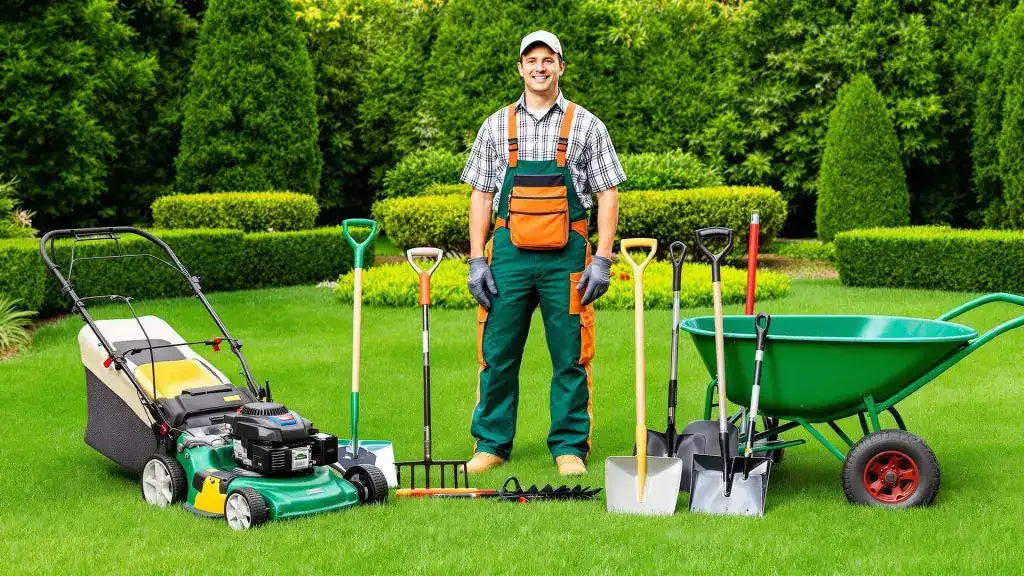
Only while it sits at the shop. The instinct that commercial property already covers your equipment is half right and entirely dangerous: a property policy covers your gear at the fixed address it is anchored to — and then largely stops following it the moment the trailer pulls out of the lot. For a landscaping operation, that is the wrong half. The fleet spends almost none of its working life at the shop. The line written to follow equipment off the address is inland marine, and this guide walks exactly why a fixed-location policy underserves a fleet that moves, and how to check whether yours leaves a gap.
The question feels settled — you bought property insurance, the equipment is property, case closed — which is precisely why operators are caught off guard when an off-premises loss lands. Below is that narrow distinction, fixed-location versus follows-the-gear, answered in full, with the broader equipment-coverage mechanics left to the page they belong on.
The short answer: property covers a place, inland marine covers the gear that moves
A commercial property policy is built around a fixed location. It insures the things that stay put at an address — the building, the contents of the shop, fixtures, inventory — and it responds to perils there, at the insured premises. The form is anchored to the property line. Once your equipment leaves that line, the coverage largely stops traveling with it. Inland marine is the family of coverage written for exactly the opposite situation: property that travels or sits away from a fixed premises. For owned, movable business equipment, the inland marine line is contractors equipment, and it follows the gear wherever the work takes it — in the yard, in transit on the trailer, and parked on the job site. The full anatomy of that line lives on its page, including why it is structured as inland marine rather than property; this post stays on the single question operators actually search before they buy: isn’t the property policy enough, and the answer is that for a fleet that moves, it is not.
Where your equipment actually spends its day
Start with the fact that decides everything: a landscaping operation’s most valuable property does almost nothing at the shop. The mowers, zero-turns, skid steers, trimmers, and blowers load out at dawn, ride the trailer from account to account, and sit on a job site exposed for hours at a stretch — and they repeat that pattern across every crew, every route, every working day of the season. The address the commercial property policy is anchored to is, in practice, the one place your gear is least often found and least often lost.
That is the mismatch. A property policy is the right tool for a business whose equipment is bolted to a shop floor and stays there. A landscaping fleet is the opposite case — its defining feature is that it moves — so a fixed-location form is covering the gear precisely where it isn’t and leaving it bare where it is. When a zero-turn is stolen off a trailer in a hotel lot or a skid steer is damaged on an open job site, the loss happened where the property policy’s coverage had already thinned out to almost nothing. Inland marine is the line built for that reality, because it is written to follow property that travels rather than to guard a single address.
Real-World Scenario: An operator runs the fleet off a commercial property policy that lists the shop and its contents, and assumes the equipment is covered because it is, after all, property he insured. Mid-season a skid steer is damaged badly enough to be totaled when it overturns on a slope at a job site twenty miles from the shop. He files on the property policy and learns that off-premises equipment is covered only up to a small sublimit — a figure set for incidental gear, not a machine that represents a serious share of the fleet’s value. The property policy pays a fraction; the rest is his. Contractors equipment inland marine, written to the machine’s full value wherever it travels, is the line that would have made him whole.
The off-premises sublimit is the gap
Operators sometimes know their property policy has some off-premises coverage and stop there, satisfied the gear is handled. The detail that undoes that comfort is the size of it. A property policy’s off-premises extension is typically a modest sublimit — a cap meant for incidental property a business might occasionally carry away from the address, not for a working fleet of machines that lives off-premises by design. For a landscaping operation, that sublimit is routinely a small fraction of what the fleet in motion is actually worth on any given day. So the coverage technically exists, but it runs out long before a real equipment loss is made whole.
Inland marine closes that gap by being sized to the equipment itself rather than to a fixed location. Contractors equipment schedules the high-value machines at honest replacement values and covers the pool of smaller gear under a blanket limit, with the whole arrangement written to respond wherever the equipment is — not subject to a thin off-premises cap. That structure is the contractors equipment page’s own subject, so this post does not restate it; the point here is narrower: the property policy’s off-premises grant is the gap, and inland marine is what fills it to the full value of the fleet.
How to check your own policy
You can confirm where you stand before a loss ever tests it, and it comes down to one number on the property policy. Find the off-premises equipment sublimit — the cap on property covered while it is away from the insured address — and set it against the realistic total value of your fleet in motion on a working day: the machines on the trailer, the gear staged at the job site, everything that is not sitting at the shop. If the sublimit is a small fraction of that total, which for a real landscaping fleet it almost always is, the property policy is not protecting the equipment where the equipment actually lives. That is the signal that the fleet belongs on contractors equipment inland marine, sized to the full value of the gear rather than to a fixed-address cap. The reading we do is exactly this comparison against your real equipment values, so the coverage matches where your machines spend their day.
What to do about the gap
Treat the location question as the whole question, because for a fleet that moves, location is what decides whether the policy is there when the loss is. Carry contractors equipment inland marine as the line that follows the gear off the shop address, check your commercial property policy’s off-premises sublimit against the real value of your fleet in motion, and stop relying on a fixed-location form to cover equipment that is rarely at the fixed location. A landscaping build operation staging heavy machines outdoors and a lawn care route cycling gear on and off trailers all day are both, in different ways, businesses whose value lives off-premises — which is the inland marine case in a sentence. The most common off-premises loss is the stolen machine, so see whether your mower is covered if it is stolen off the trailer, and if you have ever assumed your liability policy reaches your own gear, it does not. When you are ready, start a quote and tell us what you own and where it travels, read the full contractors equipment treatment, or see where the equipment line sits in what drives landscaping insurance costs.