

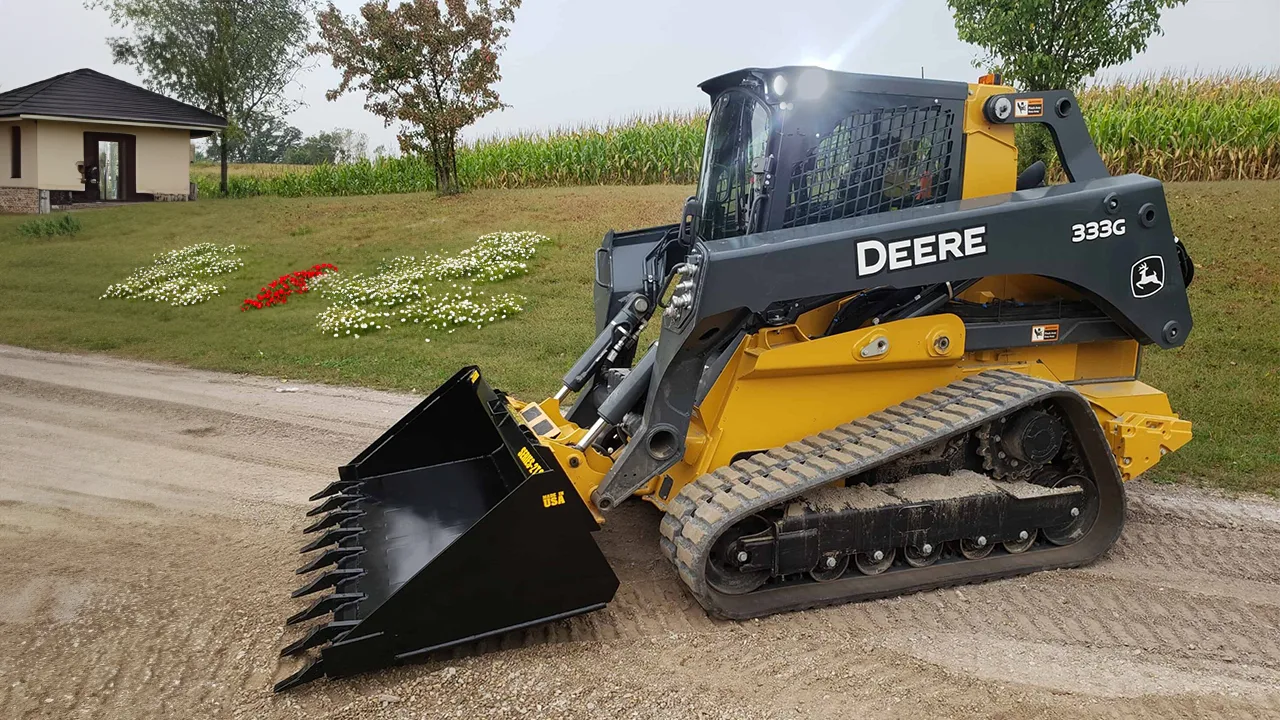
Skid steer insurance for a landscaper is usually three questions, not one policy: who insures the machine you own, who is responsible for the one you rent, and what happens when you borrow one. Liability for what it does to others sits on a different policy again.
The skid steer is the machine that most often makes a small landscaping operation look like a contractor. It grades, hauls mulch and stone, loads trucks, and digs close to buildings, driveways, and buried lines. Below is how coverage typically works for each situation, where the gaps tend to sit, and what to ask before the machine is on a job.
The short answer: the policy follows the question, not the machine
Nobody sells “skid steer insurance” as a single product. The machine touches several parts of a business program, and each part answers a different question. Damage to the machine itself belongs to the property side, usually a contractors equipment policy. Damage the machine does to a customer’s property, or an injury it causes to a bystander, belongs to general liability. An injury to your own operator belongs to workers compensation. A machine on the road belongs partly to commercial auto and partly to the equipment policy.
That is a general framework, not a promise about any particular policy. Forms differ, exclusions differ, and the schedule on your own policy is what counts. The useful habit is to stop asking “am I covered for the skid steer” and start asking which of those four questions you are really asking.
Owned: the machine is a scheduled or blanket item
A skid steer you own is typically insured on a contractors equipment policy, sometimes called inland marine, because that line is built for machinery that moves between job sites. The machine is usually either listed on a schedule with a stated value or picked up under a blanket amount that spreads across all of your equipment. The difference matters when a loss happens, and the existing explanation of inland marine versus commercial property covers why a property policy on the shop does not follow a machine out the gate.
Three things on the form are worth reading. First, which causes of loss it names, because theft, fire, collision, and upset are not always treated alike. Second, any sublimit that applies when the machine is away from the yard, since that is where it spends its working life. Third, how value is paid, whether on a replacement basis or a depreciated one. None of these can be assumed. They are choices on the policy, and a producer can tell you which ones yours made.
Rented: the rental agreement is the second half of the question
When you rent a skid steer, the rental company owns it but the agreement usually makes you responsible for it while it is in your care. That responsibility can be met in more than one way. Some equipment policies pick up rented items, often for a limited amount. Rental companies commonly offer their own protection plan for an added charge. Some operators rely on one, some on the other, and some on neither without noticing.
What matters is that the agreement and the policy line up. The agreement may say you are responsible for loss or damage regardless of fault, may set a deductible or a waiver charge, and may require you to carry certain insurance. The policy may extend to rented machines only up to a stated amount or not at all. The existing guide on rented or borrowed equipment goes through the rental-agreement check in detail; the short version is to read the agreement and the policy side by side before the machine leaves the rental yard, not after it is damaged.
Borrowed: the quiet gap
A borrowed machine is the case operators think about least and discuss with their producers last. A neighbor’s contractor lends a skid steer for an afternoon, or an operator uses a relative’s machine to finish a job. It is not on your schedule, it is not a rental with its own terms, and it belongs to someone whose own policy may exclude use by others or exclude commercial use entirely.
Damage you cause with it to a customer’s property typically still falls to your general liability policy, because that responds to what your work damages. Damage to the borrowed machine itself is different, and it may be uninsured on both sides. Some equipment policies extend to borrowed or non-owned items in a limited way and many do not. The practical rule is simple: ask the owner what their policy says, ask your producer what yours says, and put the arrangement in writing before the first bucket is filled.
What the machine does to other people’s property
A skid steer is heavy, and it works close to things that are expensive to fix. A customer’s driveway can be gouged, a paver walk broken, a curb dragged out of line, an irrigation line crushed, a lawn rutted. Accidental damage of that kind to someone else’s property is the core of what general liability typically responds to, subject to its terms and exclusions.
The exclusion to know is the one that removes damage to the work you are performing and property in your care, custody, or control. A machine that damages the thing it was working on is a different conversation from a machine that damages the next-door patio. The guide to damage to a customer’s property lays out how that line is drawn.
Grading and digging add a second exposure, which is what is under the ground. A skid steer with a bucket or an auger attachment can strike a buried gas, electric, water, or communications line, and the cost of that strike can be large. The existing explanation of who pays when a crew hits an underground utility line covers how that loss is usually handled and why the call-before-you-dig service is only part of the answer. The national call before you dig service explains how to request a locate before the ground is opened.
The operator: injury, helpers, and who counts as an employee
A skid steer injures people in particular ways: tip-overs, pinch points, moving attachments, and people standing too close to a loaded bucket. The operator who is hurt is normally a workers compensation question if they are an employee. The helper who stands nearby and is hurt is the same question, and the answer depends on how that person is classified.
This is where small operators run into trouble. A seasonal helper paid in cash, a friend who occasionally lends a hand, and a subcontractor with no policy of their own can each be treated differently by the policy and by the audit that follows. Describe everyone who runs or works around the machine to your producer, because a classification surprise at claim time is harder to fix than at placement. The broader discussion of injuries from landscaping equipment covers how those claims are typically handled.
For general safety expectations around machinery on a job site, the OSHA material on landscaping is a reasonable reference to keep to hand.
On the road: trailers, transit, and theft
A skid steer spends part of its life on a trailer behind a truck. The truck is a commercial auto question, the trailer is usually a separate item with its own treatment, and the machine on it is an equipment question. Those three pieces do not always sit on one policy, and a loss involving all three can reveal that none of them quite picks up the gap. The guide to trailers and the equipment inside them explains why the auto policy usually does not pay for the machine.
Theft is the other loss. A machine left on an unattended trailer or in an open lot is an attractive target, and the equipment policy may carry a theft sublimit, a locking condition, or a storage requirement. Is my mower covered if stolen off the trailer walks through the same pattern for smaller machines, and it applies equally here. The companion post on mower insurance for landscapers covers the smaller machines and the personal-use question.
Real-World Scenario: A small landscaping company buys a used skid steer to grade a backyard patio base, and also borrows a friend’s trailer to move it. Midway through the job the operator rents an auger attachment for post holes. Later, a rented attachment is damaged on a buried obstruction and the machine is stolen from the trailer overnight in the same week. The producer’s answers are different for each loss: the stolen machine depends on whether it was scheduled and how theft is treated away from the yard, the attachment depends on the rental agreement, and the trailer depends on whose policy it sits on. None of the answers was “yes, covered” or “no, not covered” in a single sentence. The detail that mattered was knowing which of the three situations each item was in.
What to ask a producer before the machine is on a job
Bring the machine and the plan for it, and ask in this order. Is the machine on the equipment policy, and is it scheduled or part of a blanket amount? Is there a theft sublimit or a condition for machines away from the yard? How are rented machines and attachments handled, and for how much? Does anything extend to borrowed or non-owned equipment? Who counts as an employee for workers compensation when someone helps run the machine? And does the general liability form carry anything that limits grading, excavation, or underground work?
Write the answers down and compare them against the rental agreement, the contract with the customer, and the use you actually have in mind. If you are starting the conversation, you can start a quote and describe the machine, how it is stored and moved, and who runs it. For who answers your questions and how we place this kind of work, see about us. For the wider program that surrounds a build-oriented operation, start with landscaping insurance.