
States we serve · South Dakota
South Dakota landscaping & lawn care insurance
South Dakota runs a short, high-elevation season where irrigation runs central. We write the pollution, contractors equipment, general liability, commercial auto, and workers compensation that South Dakota design/build, maintenance, irrigation, and lighting operations actually need.

South Dakota is a real landscaping and lawn-care market, and a policy rated to a generic South Dakota contractor misses what actually decides a landscaping operator’s claims: the herbicide that drifts onto a neighboring property, the rock thrown from a mower, the buried utility line struck while trenching, and the mowers and trailers that run the routes. This page walks the cost drivers, the verified South Dakota licensing picture on both the lawn-care and the build/install sides, the state’s seasonal market, the risks we see, and the major South Dakota markets — and links the coverage and service detail throughout.
What South Dakota Landscaping Insurance Costs
There is no single South Dakota price, and any number quoted before an underwriter sees your operation is a guess. What actually moves a South Dakota landscaping operator’s premium is the shape of the work. The biggest drivers are your payroll and crew classifications, your mix of design/build, lawn maintenance, irrigation, and lighting work, your chemical-application and pollution exposure, the size and value of your fleet and equipment, the limits your commercial and HOA accounts demand, and your claims history. A design/build firm trenching irrigation looks very different to an underwriter than a mowing-route operation. We rate each operation to its real exposure rather than off one generic contractor class — start with a free quote and we price to the work. For the full breakdown of what drives the number, see our South Dakota landscaping insurance cost guide.
South Dakota Landscaping Licensing & Regulation
South Dakota regulates the lawn-care and the build/install sides of the trade differently, and getting both right is the foundation an underwriter and a commercial account expect. There are two tracks.
Lawn-care chemical application
On the lawn-care side, applying pesticides, herbicides, or fertilizer to lawns and ornamentals for hire in South Dakota is regulated under the federal FIFRA framework by the South Dakota Department of Agriculture and Natural Resources. Lawn and ornamental work falls under Category 3 (Ornamental and Turf), covering for-hire treatment of lawns, turf, and the ornamentals within them. The licensing authority is the South Dakota Department of Agriculture and Natural Resources. The practical takeaway: if your crews apply herbicide, pesticide, or fertilizer to lawns and ornamentals for hire, the operation needs the right commercial applicator certification, and that licensing sits underneath the pollution exposure this trade carries.
Landscape, irrigation & contractor licensing
South Dakota has no statewide landscape-contractor license for general landscaping, hardscape, or design and build work — those requirements are local and municipal. Contractors hold a Contractor Excise Tax license from the Department of Revenue and may face local registration in Sioux Falls or Rapid City, but landscaping and lawn maintenance is not state-licensed. A commercial account or contract sets its own insurance and certificate requirements on top of whatever applies. The practical takeaway: a commercial account or contract will layer its own insurance and certificate requirements on top of whatever license applies.
State insurance regulator & worker safety
Insurance in South Dakota is overseen by the South Dakota Division of Insurance (DOI), which regulates the admitted carriers your program is placed with. On the job, lawn-care chemical use runs through the federal EPA FIFRA framework, calling 811 before digging is the underground-utility standard of care on irrigation and lighting work, and worker safety — equipment, heat, and chemical handling — runs through OSHA standards.
South Dakota Seasonal Market
A short, northern growing season runs South Dakota’s landscaping and lawn-care work from spring thaw through fall, with harsh winters shutting down most mowing, hardscape, and irrigation; demand clusters in the Sioux Falls and Rapid City corridors.
With no statewide landscape-contractor license, a Category 3 applicator credential plus a solid commercial insurance program is the clearest mark of a legitimate South Dakota lawn-and-turf operator. A long, severe winter compresses billable field work into a short growing season, pushing crews to maximize spring-through-fall throughput. That spread is why we weight each South Dakota operation’s coverage to where and how it actually works rather than to a statewide average.
Common South Dakota Landscaping Risks
South Dakota layers the trade’s own hazards onto its season and market. A long, severe winter compresses billable field work into a short growing season, pushing crews to maximize spring-through-fall throughput. The diagram below maps the operating risks a South Dakota landscaping operator carries to the coverage lines that respond — the drifting or misapplied chemical to pollution liability, the thrown rock or struck utility line to general liability, the mowers and trailers to contractors equipment, and the crews and trucks on the routes to workers compensation and commercial auto.
Common South Dakota Landscaping Claims We See
These are the claim categories an underwriter expects on a South Dakota landscaping file. They are described qualitatively and with generic carrier language — every claim is handled by the carrier, never named here.
- Herbicide drift, overspray, or fertilizer runoff. A chemical reaches a neighboring property, ornamentals, or a water source, or a misapplication burns a customer’s turf — a pollution exposure a standard general liability policy excludes, and the signature lawn-care claim.
- A rock thrown from a mower or a struck utility line. A mower-thrown object breaks a window or a vehicle, or a trencher hits a buried gas, water, or fiber line on an irrigation job — a third-party general liability exposure on the routes and the job sites.
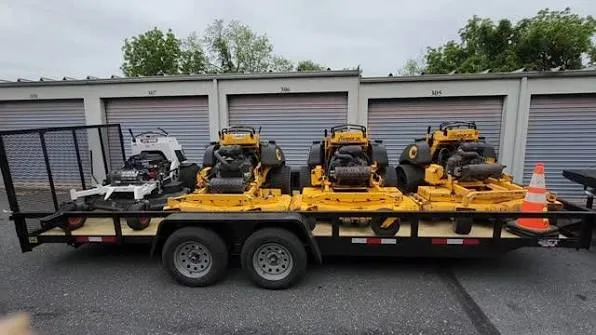
- Equipment stolen from a job site or a trailer. A mower, skid steer, or a trailer of gear is stolen or damaged — a contractors equipment (inland-marine) loss across a fleet that runs the state every day.
- A crew member injured in the field. An equipment injury, a lifting strain, heat illness, or a vehicle accident on the route — the workers compensation exposure of a crew-based operation.
Why South Dakota Landscaping Contractors Choose Landscaping Guard Insurance
We write one trade — commercial landscaping and lawn care operators — and we place coverage with carriers that actually want the class. In South Dakota that focus matters. We know to treat pollution liability as core for a lawn-care operation that applies chemicals rather than an afterthought, to schedule the mowers, skid steers, and trailers that ride the routes, to read the property-damage and utility-strike exposure into the general liability program for design/build and irrigation crews, to structure workers comp around how the state actually handles it, and to confirm the applicator and contractor licensing and the commercial-account requirements before you mobilize. With no statewide landscape-contractor license, a Category 3 applicator credential plus a solid commercial insurance program is the clearest mark of a legitimate South Dakota lawn-and-turf operator. When a South Dakota property manager or HOA sends over insurance requirements you do not recognize, that is a call we take.
Major South Dakota Landscaping Markets
South Dakota is not one market — its metros each carry their own season and service mix. These are the major landscaping submarkets we place across.
Sioux Falls
Sioux Falls is South Dakota’s largest landscaping submarket — dense commercial-property and HOA maintenance demand alongside steady design/build and irrigation work, set against a short, high-elevation season and dry climate that put irrigation at the center of the work.
Rapid City
Rapid City contributes a large recurring mowing and fertilization base plus design/build and hardscape work across the surrounding area.
Aberdeen
Aberdeen contributes heavy irrigation-install and maintenance demand across its developments across the surrounding area.
Brookings
Brookings brings a steady mix of maintenance routes, fertilization rounds, and landscape-install work, with a short, high-elevation season and dry climate that put irrigation at the center of the work shaping the calendar.
Watertown
Watertown contributes commercial, municipal, and HOA accounts that drive recurring maintenance and seasonal install work across the surrounding area.
Mitchell
Mitchell contributes outdoor-living, hardscape, and lighting demand on top of a recurring maintenance base across the surrounding area.
South Dakota is one of the 48 states we are licensed in. Compare licensing, season, and market conditions across every state we serve.
Related Reading
South Dakota coverage works as a system. Start with the two lines that define the trade — pollution liability for chemical application and contractors equipment for the gear — then the general liability and commercial auto that follow the work and the trucks across the state. By operating model, see landscaping insurance, lawn care insurance, irrigation installation insurance, and landscape lighting insurance. To compare other states, use the states we serve index.
South Dakota Landscaping Insurance FAQs
Do landscaping or lawn care businesses need a license in South Dakota?
It depends on the work. On the lawn-care side, the South Dakota Department of Agriculture and Natural Resources licenses commercial applicators who treat lawns and ornamentals for hire under the federal FIFRA framework. On the design and build side, South Dakota has no statewide landscape-contractor license, so general landscaping and hardscape work is governed locally. Licensing is the floor — a commercial account or contract sets its own insurance and certificate requirements on top of it.
Why does a South Dakota lawn care operation need pollution liability?
Because a standard general liability policy excludes pollution, and on the lawn-care side the chemistry is part of the work. A misapplied or drifting herbicide, an overspray onto a neighboring property, a fertilizer burn on a customer’s turf, or runoff after a treatment falls outside general liability. Pollution liability is the line written to respond to exactly those chemical-application events, which is why we treat it as core for a South Dakota lawn-care operation rather than an optional add-on.
Does insurance cover a rock thrown from a mower or a struck utility line in South Dakota?
Yes — that is core general liability territory. A rock thrown from a mower deck through a window or a parked car, or a trencher striking a buried gas, water, or fiber line while installing irrigation, is third-party property damage general liability is built to respond to. Calling 811 for a utility locate before digging is the standard of care that strengthens both your defense and your file. The chemical-drift exposure is the piece general liability does not reach — that runs to pollution liability.
Are my mowers, skid steers, and trailers covered if they are stolen in South Dakota?
Through contractors equipment coverage — an inland-marine line — yes. Your mowers, skid steers, trailers, and the gear you haul between job sites are your biggest asset, and they move around in a way a policy tied to a fixed address does not follow. Contractors equipment covers that gear at the shop, in transit on the trailer, and on the job site, including theft from a trailer or a site, subject to the policy terms. We confirm how the form treats equipment on the trailer and at remote sites before you bind.
How does workers comp work for South Dakota landscaping crews?
Workers compensation in South Dakota is placed with a private carrier — it is not a monopolistic state-fund state. For a landscaping crew the injury profile is real: mower and equipment injuries, lifting and repetitive strain, heat illness working outdoors, chemical handling on the lawn-care side, and trenching hazards on irrigation work. Many commercial and HOA accounts require comp regardless, so we structure it around how your crews actually run.
How fast can I get a certificate of insurance for a South Dakota account?
Once your policy is in force, certificates for a South Dakota property manager, HOA, commercial account, or general contractor are typically same-day during business hours, including the additional-insured wording the contract requires. Getting the certificate right — correct limits, correct additional-insured status, correct description — is what keeps an account and protects a bid, so we confirm exactly what each contract demands before issuing.
Get a South Dakota landscaping insurance quote
Tell us how your South Dakota operation works — design/build, maintenance, irrigation, lighting, or all of it — and we will market it to carriers that write the class.