

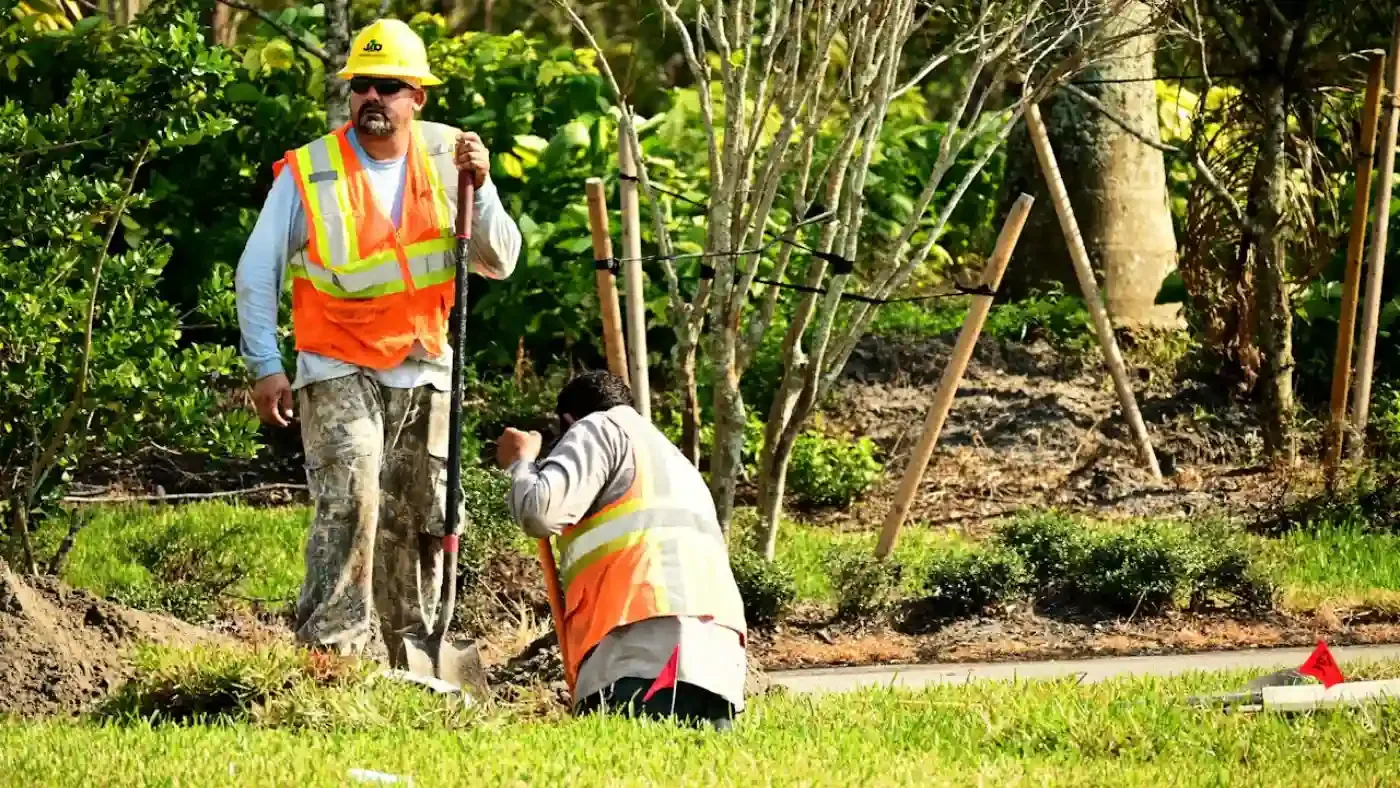
A landscaping business is its crew. The trucks, the equipment, and the accounts matter, but the work gets done by people, and the operators who grow are the ones who can find good crew, train them, and — the hardest part — keep them. Hiring in this industry is unusually difficult: the work is physical and seasonal, the labor pool is tight, much of the workforce comes from immigrant and seasonal-labor communities, and turnover is constant for the operators who treat staffing as a problem they solve only when someone quits. Get hiring and retention right and the whole operation steadies; get it wrong and you spend the season rehiring the same positions.
This guide walks the full cycle — recruiting where workers actually are, onboarding and training so they can do the work safely, paying and building a culture that gives them a reason to stay, and the seasonal-labor reality including the federal H-2B visa program that many operators rely on. A note up front: employment and immigration rules are complex and change, so confirm the requirements that apply to your operation with qualified counsel rather than treating any general guide as the last word.
Recruiting: finding crew before you urgently need them
The operators who staff well share one habit: they recruit continuously, not only when a position opens. By the time a worker quits mid-season, an open seat is an emergency, and emergency hiring produces rushed decisions and thin crews. A standing pipeline changes that, and it is built from several channels at once. The strongest is almost always referrals — a good crew member tends to know other good workers, and a worker who refers a friend has staked their own standing on that person, which selects for quality in a way a cold posting cannot. Many operators make referrals a deliberate part of recruiting rather than a happy accident.
Beyond referrals, the channels are local and specific: community job boards, trade and vocational programs, and word of mouth in the immigrant and seasonal-labor communities that staff much of the industry. A meaningful share of landscaping operators also use the federal H-2B seasonal-worker visa program for part of their crew, which the next section covers. The point is breadth and consistency — running several channels at low volume year-round so a pipeline exists before it is urgent, rather than scrambling through a single posting the week a worker leaves.
The seasonal-labor reality and the H-2B program
Landscaping is a seasonal industry over much of the country, and the labor supply does not always meet the demand during peak months. To bridge that gap, many operators turn to the federal H-2B program — a temporary, non-agricultural seasonal-worker visa administered through the U.S. Department of Labor and related federal agencies — which lets employers bring in seasonal workers when they cannot find enough domestic labor. Landscaping is one of the industries that relies on H-2B most heavily for its seasonal crews.
The honest reality is that the program is not a dependable backstop. The H-2B program is capped and heavily oversubscribed — the demand for visas runs well beyond the supply, so an operator cannot assume the workers they request will be available. The process is also complex, the rules change, and the timing has to be planned well ahead of the season. None of that makes H-2B unusable; it makes it something to approach with realistic expectations and professional help. Because employment and immigration requirements are intricate and consequential, confirm what applies to your operation with qualified counsel — an attorney or a specialist who handles seasonal-worker visas — rather than relying on a general guide. The takeaway for staffing planning is that H-2B can be one channel among several, but building a crew strategy that depends entirely on it is fragile.
Onboarding and training: setting crew up to succeed
Hiring a worker and keeping a worker are connected at onboarding. A new crew member thrown into the work with no real training is more likely to get hurt, make costly mistakes, and quit — and each of those outcomes is expensive, the injuries most of all. Onboarding that teaches the work, the equipment, and the safety practices before the worker is fully loaded onto a route does two things at once: it lowers the risk that drives insurance and claims costs, and it signals to the worker that the operation is run well and worth staying with.
Training is also where crew depth is built. A business that documents how the work is done and trains people to do it consistently is one that can run on its crews rather than on the owner’s constant supervision — and that depth is both an operational strength and, as the closing section notes, part of what makes the business valuable. Practically, this means safety training that is real rather than a signed form, equipment instruction so the work is done right and the machines last, and a path for a new hire to learn the route and eventually take on more. The investment in training is small against the cost of the injuries and turnover that poor training produces.
Pay, culture, and the retention that holds it together
Recruiting fills the crew; pay and culture keep it. Retention is the part operators underrate, because the cost of turnover is hidden — you do not see the productivity lost, the recruiting time spent, the slower replacement learning the route, and the elevated injury risk of a thin or green crew, but they add up to far more than the open seat suggests. Keeping good workers is almost always cheaper than the cycle of rehiring them, which is why time spent on retention pays back more than the same time spent recruiting.
Retention is built, not hoped for. Pay competitively for your market and — just as important — pay reliably and on time, because unpredictable pay drives workers out faster than a slightly lower rate. Build a culture where crew are treated with respect, trained to succeed rather than blamed for what they were never taught, recognized for good work, and given a path to more responsibility and pay. Run safe job sites and keep the equipment in shape so the work is not harder than it has to be. None of this is exotic — it is the unglamorous discipline of making staying more attractive than leaving. The operators who hold their crews are not the ones who pay the most; they are the ones who are predictable, respectful, and worth working for season after season.
Real-World Scenario: Two operators run similar-sized crews in the same market. The first hires only when someone quits, posts the opening, takes whoever applies, hands them a mower, and points them at a route — and spends every season rehiring the same positions, with a green crew that works slower and gets hurt more. The second recruits year-round through referrals and a couple of steady channels, onboards new hires with real safety and equipment training before loading them fully, pays on time, and gives workers a path to lead a crew. Their turnover is a fraction of the first operator’s, their crews are faster and safer, and when a worker does leave, a referral is usually already in the pipeline. Same labor market, very different operations — and the difference is treating the crew as something you build and keep, not something you replace.
Crew depth is operations and equity at once
Building and keeping a landscaping crew is the hardest, most continuous work an owner does, and it pays back twice. The first return is operational: a stable, trained crew runs faster, safer, and with fewer of the claims that drive insurance costs, and the workers compensation that covers them rests on exactly the safety record that good hiring and training produce — so the crew you build shapes the coverage stack and the loss runs underneath it. The second return is equity. A business that runs on trained crews and a manager who can quote and schedule transfers cleanly to a buyer, while one held together by the owner personally directing every job walks out the door when the owner does — which is why crew depth is one of the drivers that lifts what a landscaping business is worth. Staffing well also makes you able to take on the contracted accounts that build value, the subject of the companion guide on landing commercial landscaping contracts. When your crew grows and the operation changes shape, make sure the coverage keeps up — start a quote so the policy matches the crew you actually run, and browse more owner resources as the library grows. And on the employment and immigration questions this guide only frames, confirm the specifics with qualified counsel.